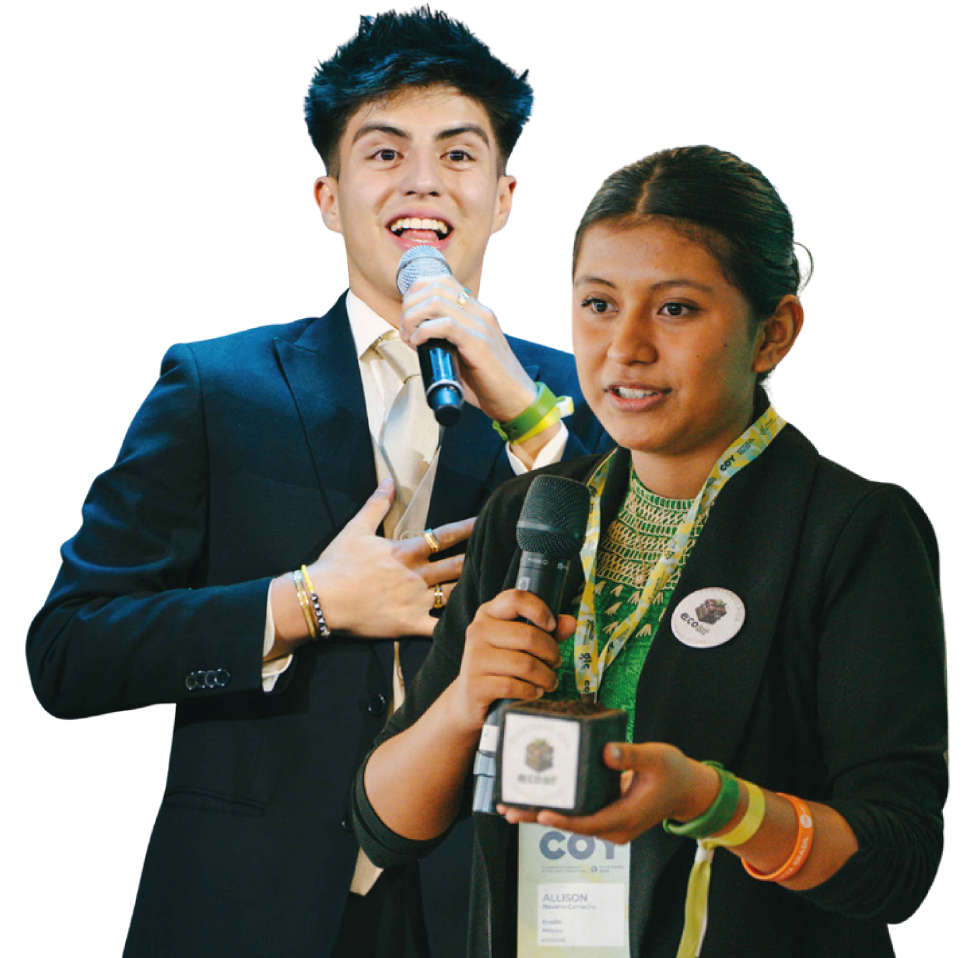
Young talent needs a first opportunity

To land a first job, experience is often required. But how can a young person gain it if no one gives them the chance to start?
This contradiction is at the heart of the fourth edition of Youth talent and businesses: from disconnection to opportunity, the study we just presented together with ManpowerGroup. More than 7,000 young people and 600 companies from 16 countries took part. One of the most relevant findings is that more than half of the young people looking for work identify lack of experience as one of their main barriers.
The study leaves us with a clear message: preparing young people is essential, but it is not enough. They need opportunities to put into practice what they learn, show their abilities, and build confidence. And companies have a key role to play in making that happen.
Artificial intelligence makes this challenge even more important. Tools change faster and faster, but judgment, curiosity, autonomy, and the ability to adapt are developed through practice.
A few weeks ago, during the GET Forum in Quito, hearing Rebeca Hwang, an investor, Stanford professor, and Junior Achievement alumna, led me to reflect on something essential: how much we learn when we dare to experiment, face challenges, and make mistakes.
At Junior Achievement, we deeply believe in the value of learning by doing. That is why we offer experiences that allow young people to create their own ventures, solve real problems, work as a team, and discover what they are capable of.
But we need to take one more step. Bringing education closer to the world of work also requires companies willing to bet on the potential of those who do not yet have experience.
The challenge is shared. At Junior Achievement, we want to keep building bridges between young people, companies, and educational institutions so that more and more young people can turn what they know into real opportunities.
Warm regards,


Youth talent and businesses 2026: from disconnection to opportunity
Together with ManpowerGroup, we launched the fourth edition of our study Youth Talent and Businesses 2026. From disconnection to opportunity: pathways to employment in Latin America. The report analyzes the transition to the world of work from two perspectives: that of young people looking for jobs and that of companies that hire and develop young talent.
In this edition, we heard from 7,465 young people and 641 companies from across the region, and we produced dedicated summaries for Argentina, Brazil, Colombia, El Salvador, Guatemala, Mexico, Paraguay, and Peru.
The results show that one of the main challenges is connecting young talent with job opportunities. Experience remains a significant barrier: 54.8% of young people looking for work cite lack of prior experience as an obstacle, and 48.7% of employers acknowledge this same difficulty when hiring. In addition, 80.9% of those actively looking for work face two or more obstacles at the same time.
Timing matters too: employers' willingness to hire young people without experience drops from 52.6% for those aged 18 to 21 to 23% for those aged 26 to 29.
The study also reveals that the artificial intelligence gap is shifting from access to application. Already, 91.1% of young people use AI in some way, but only 13% use it to make decisions or solve problems. The question is no longer whether they use it, but what they can do with it.
Based on these findings, we propose four priorities: expanding opportunities to gain recognized early experience, connecting learning with the needs of the labor market, tailoring support to young people's pathways, and strengthening entry and development opportunities within companies.
We want this evidence to help guide decisions that improve young people's transition to employment and to strengthen partnerships among companies, educational institutions, and public sector organizations.
The skills they develop need opportunities to be put into practice, be recognized, and translate into experience.
Read the full report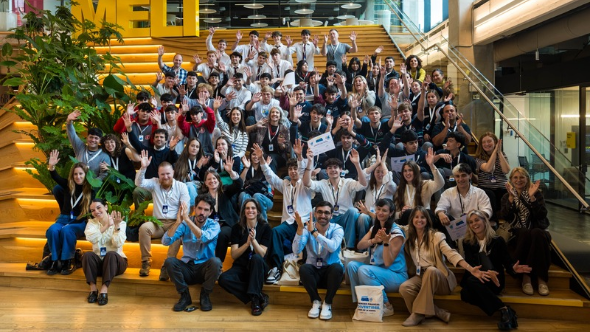
More than 10,000 students took part in Argentina's Financial Education Olympiads
Together with Mercado Pago, we closed the third edition of the Financial Education Olympiads in Argentina, which brought together more than 10,000 students from 400 schools to learn about saving, investing, credit, and digital security.
The winning teams, from Pilar, Bahía Blanca, and Santa Fe, developed digital security tools, proposals to support older adults, and a game for learning about finances as a family.
After three editions in Argentina, the Financial Education Olympiads will come to Mexico for the first time, which will allow this initiative to reach more young people across the region.

#AIForImpact: young people across the Americas developed artificial intelligence solutions for their communities
#AIForImpact is an innovation challenge co-created with HP for young people ages 16 to 25 as part of NAUFest. It challenged participants to use artificial intelligence to develop solutions to real problems in their communities. Through six learning modules, hands-on activities, and the guidance of HP professionals, they learned to identify problems, explore opportunities, design solutions, and develop a minimum viable product. A total of 1,654 young people took part, and 805 of them submitted proposals that were evaluated by a jury.
First place went to Gabriel Pôpe, from Brazil, creator of Nino, an app that uses AI to support families during pregnancy and their children's first years of life, with daily tracking and personalized responses based on validated medical information.
As recognition, Gabriel will travel to Guatemala to take part in the International Entrepreneurs Forum (FIE) 2026, a gathering that brings together young people from different Latin American countries to strengthen their leadership and entrepreneurship skills through workshops, conferences, and exchange activities.

A new chapter in Junior Achievement leadership
The global Junior Achievement network is preparing for a new beginning. After more than 11 years at the helm of Junior Achievement Worldwide, Asheesh Advani will take on a new challenge as CEO of Generation Unlimited, a United Nations public-private partnership linked to UNICEF. Starting in January 2027, Caroline Jenner will be the new president and CEO of Junior Achievement Worldwide.
During Asheesh's tenure, the organization generated more than 28 million learning experiences annually, expanded its global partnerships, and strengthened collaboration among the different regions and organizations that make up the network. In addition, Junior Achievement was recognized among the world's top ten NGOs for seven consecutive years and received multiple Nobel Peace Prize nominations.
Caroline has more than 30 years of experience in education and youth entrepreneurship. She led Junior Achievement Europe for 17 years and, since 2020, has served as Chief Operating Officer of the global office. Her experience and knowledge of the organization will be key to ensuring continuity in the network's work and advancing toward its goal of reaching 100 million learning experiences annually by 2050.
From the Americas regional headquarters, we support this transition and recognize Asheesh's contribution to the growth and strengthening of the global network, as a new chapter of leadership begins with Caroline at the helm of the organization.
Read the full Junior Achievement Worldwide announcement
Brazil · Militag won the 2026 Miniempresa Award with a technology solution
Ten student companies, made up of 241 young people, took part in the 2026 Miniempresa Award, held in Piauí, Brazil. The teams developed their ventures through Miniempresa, Junior Achievement's La Compañía program in Brazil.
Militag, made up of 27 students from Colégio Tiradentes da Brigada Militar in Caxias do Sul, took first place with a smart keychain tag that uses NFC technology. By holding a phone near it, users can access emergency contacts, addresses, and other data, with the option to protect the information with a password and without needing to install an app.
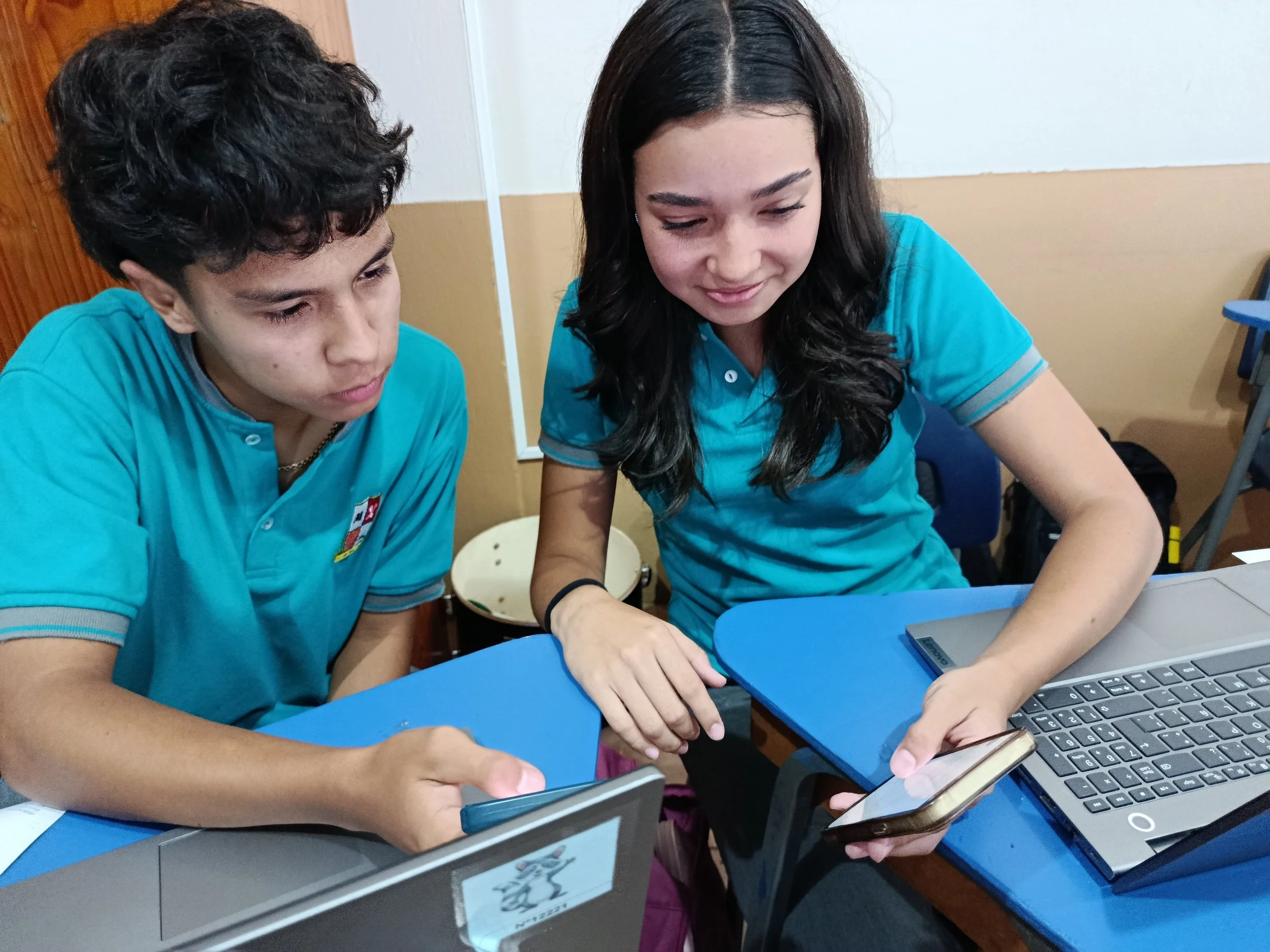
Mexico · 250 young people certified their entrepreneurial skills
250 students in the La Compañía program in Mexico passed the Entrepreneurial Skills Pass (ESP) exam, the international certification that validates the entrepreneurial knowledge and skills acquired by creating and running their own companies.
The certification is awarded by Junior Achievement together with CSR Europe and Eurochambres, with the backing of the Organization of American States (OAS).
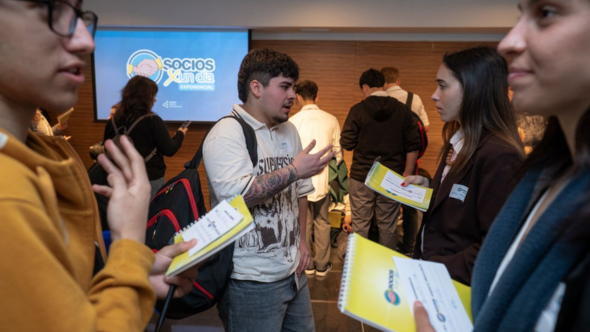
Uruguay · More than 100 young people explored the world of work alongside professionals and companies
Junior Achievement Uruguay closed a new edition of Socios por un Día Exponencial, with more than 100 young people, 50 corporate volunteers, and 10 companies taking part.
Through meetings with professionals and company visits, students got a close-up look at different professions and work environments, explored their interests, and broadened their perspectives on opportunities to enter the world of work.